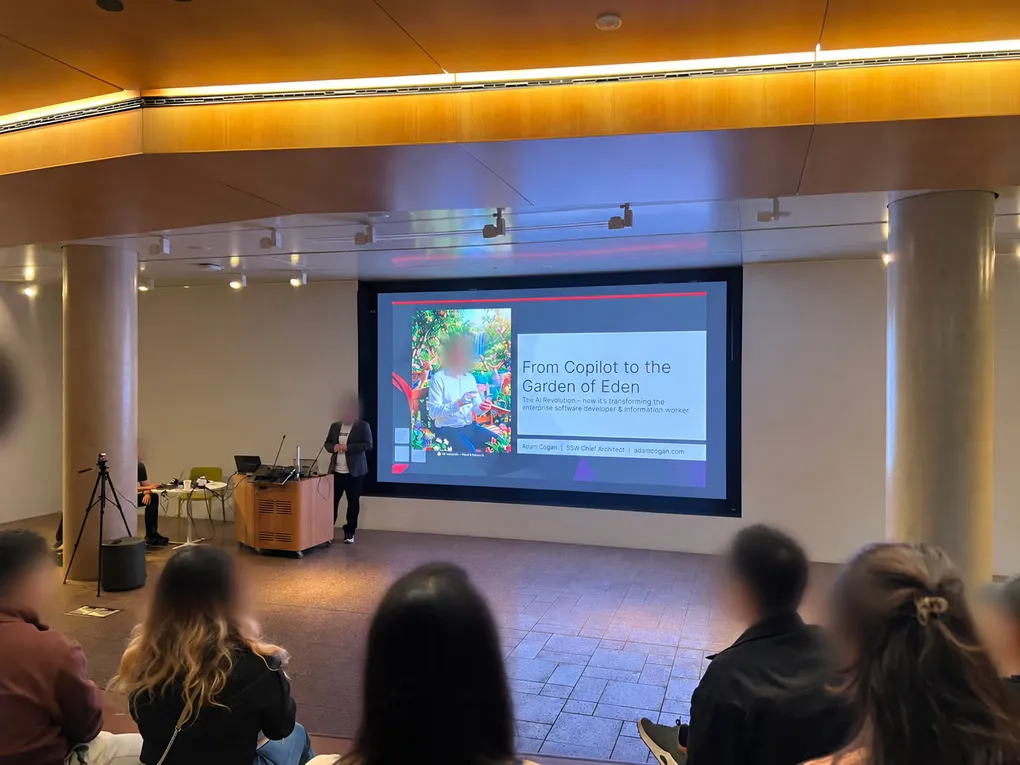
DotNet Meetup - A Run-In with the Future?
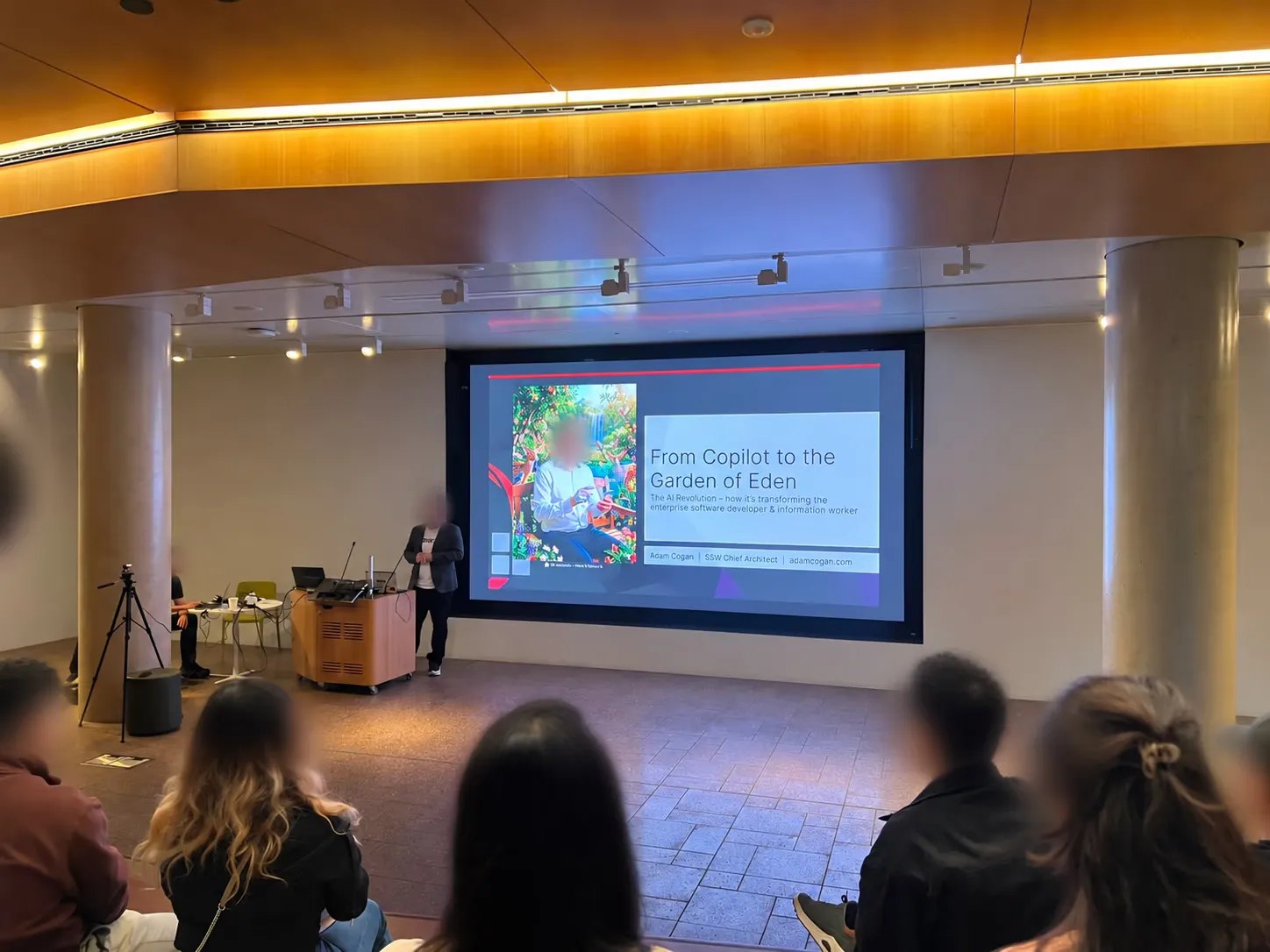
I went to the last .NET event of the year. If you want a meetup in Adelaide that goes properly deep on tech, this is the one.
The first time I went, it was so technical that I felt a bit lost. But even if you don’t follow everything, similar themes keep coming up after two or three visits, so you can get by just fine :). And of course, these days AI is the main topic.
I try to approach problems from the user experience side rather than the tech side (not that I’d deny having an engineer’s mindset too), but here I can talk about technology completely guilt-free, and hear from people who have actually put it to work.
Which means this is the real deal, a gathering of actual engineers. (There were three Microsoft MVPs in the room. Wow.) On top of that, team leads and surrounding stakeholders show up too, so I got to talk with people from all across the spectrum.
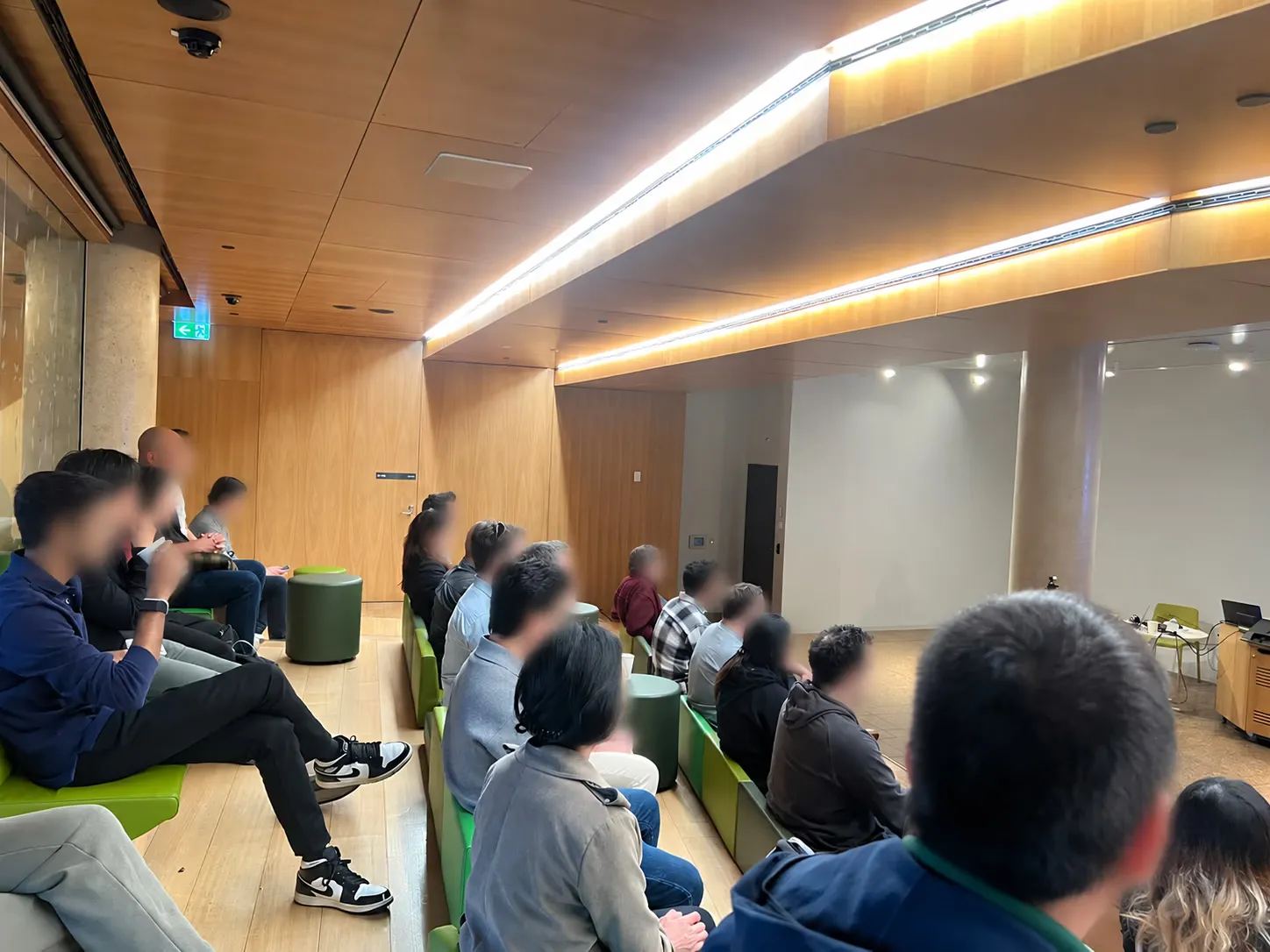
To give you a few examples:
- A CEO running an enterprise software development and consulting company
- A freelancer
- Someone who left a stable, high-paying job to take a shot at a startup
- A developer working in defence
- Students and junior developers
- Someone who trains and builds AI models
- The Adelaide organisers who keep running local community events like .NET and DDD Adelaide
That’s quite a mix of people.
Honestly, what else can you offer a developer besides money? Free Domino’s pizza aside, of course.
I hadn’t had dinner, so I really enjoyed the pizza, though I forgot to take a photo. Thanks to Simon, Encode Talent, and the sponsors (GUESTPIX) for providing it 😋
What I paid special attention to this time was how developers’ attitudes toward AI are changing in software development, and what impact that’s actually having.
It seems like the number of projects is going up while the demand for people is going down. I also listened closely for how engineers can take the stubbornness and pride we have about good design and turn it into something clients can actually see the value in. Put another way, I’m happily lost, just like Richard P. Gabriel was, somewhere between his Worse is Better and Worse is Better is Worse. Lol.
Oh, and one thing that stuck with me was an exchange during the talk. Another software engineer raised a question about whether the review overhead of AI-generated code is just too much to be efficient in real work.
After the talk I went over to talk to them, and we had a pretty long conversation. My argument was that whether it’s a compiler, a runtime like the JVM or .NET, or even the CPU implementation at the circuit level, we have to trust some black box to get our work done. So at some level, being a software developer means trusting a black box, and I asked whether prompting AI couldn’t be approached the same way. I also shared my view that a developer’s preference for AI prompting comes down less to the AI’s “intelligence” or “ability” (a belief I’ve had brutally shattered over the past year) and more to whether the developer’s intent is in sync with the model, in other words, a question of comfort.
But it turned out they had worked on a lot of defence projects, which is a completely different world from mine. In an environment where lives are at stake and security is extreme, it struck me that understanding the system inside and out, almost to an excessive degree, would actually be a plus. After that conversation, I seriously reflected on my own development environment and stack.
- I mostly do web development.
- The code I write mostly depends on the browser or a runtime (Java or C#). The JVM and .NET Runtime are like magic, optimising for the execution environment to near-native speeds (or even faster).
- Most of the dev market is the web, and maybe because of that, the tooling is absurdly friendly, from optimisation to compile-time checks to type checking. Whatever I try to break, there are nets spread out everywhere.
- AI models are specialised for exactly this kind of work. Remember in Iron Man 1 when Tony tells JARVIS “work up the suit like this” and it just comes out right? In the digital world, we’ve reached that point, or passed it a long time ago.
- The tricky part of web development is ultimately the database. These days I barely review code before committing, but I still review anything touching the entity and DB changes two or three times. Code can be fixed after it ships, but once a data structure has taken shape, it’s really hard to change. As long as I have the data relationships and structure clearly mapped out in my head, I can mess up the code however I like. If it compiles, I can fix it later (as long as I haven’t tangled up the structure).
Anyway, we talked for quite a while, and near the end we got onto what we’d studied at university and, naturally, how long ago we’d graduated. I knew they’d have more experience than me, but it turns out they graduated 20 years ago..! (I graduated 2 years ago, for the record.)
Hmm.. I was suddenly really grateful that they listened to the opinions of a second-year developer who was just excited to be somewhere he could talk freely about IT and the developer experience.
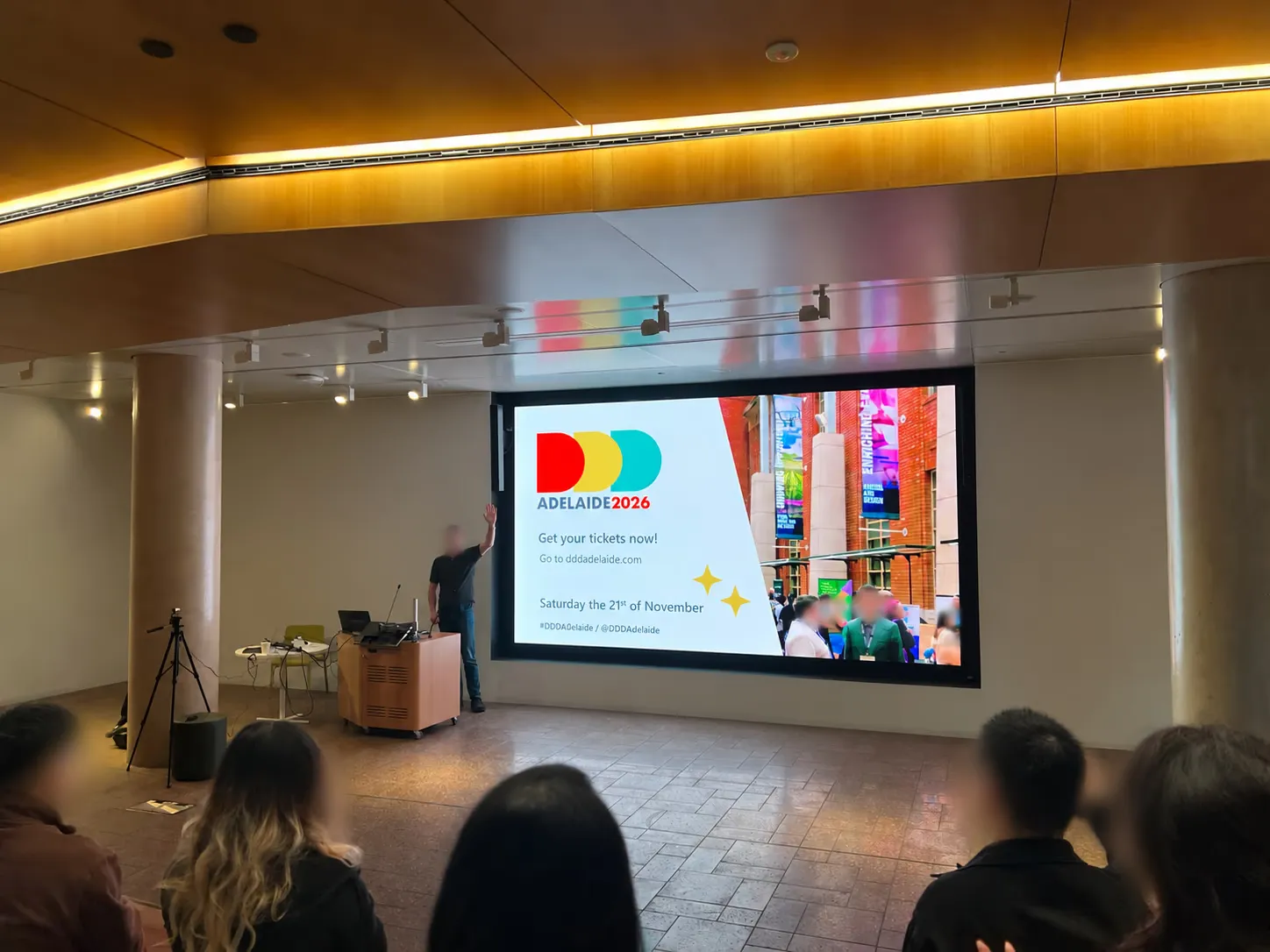
By the way, I absolutely recommend DDD. It’s the developers’ Christmas, held every year in Adelaide.
So the moral of this meetup for me is appreciation.
- The developers who build for developers, creating an environment where my code can run wild. More directly, all the MS MVP contributors who attended.
- The community meetup organisers who set up these gatherings and places for conversation.
- The senior engineers who listen to and ask about the feelings and insights I have, regardless of my experience.
- The AI that lets me run wildly through the forest of development, and Codex, which makes that possible for $20 a month. (Beyond writing code, I’ve been freed from nearly every question I have, at least in the realm of logic.)
- My workplace, which helps me build up so many insights as I work.
- And lastly, the pub where all these interesting conversations could happen, the West Oak Hotel. (Sadly, I didn’t take a photo here either.)
What else is out there for me?
Of all the people I met here, who is closest to my future?
Will I have the eyes of an engineer who can see the whole picture someday?
Or will I still be happily running through the underbrush of development, frantically solving the puzzles right in front of me?